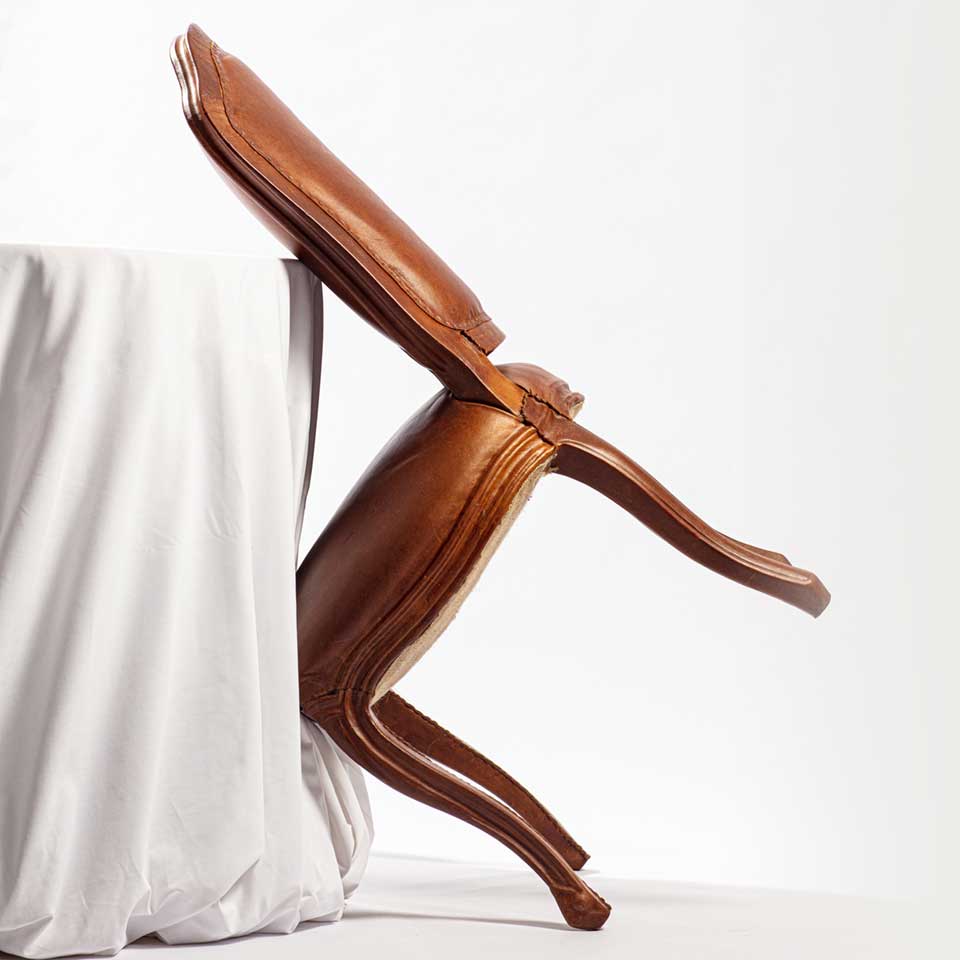
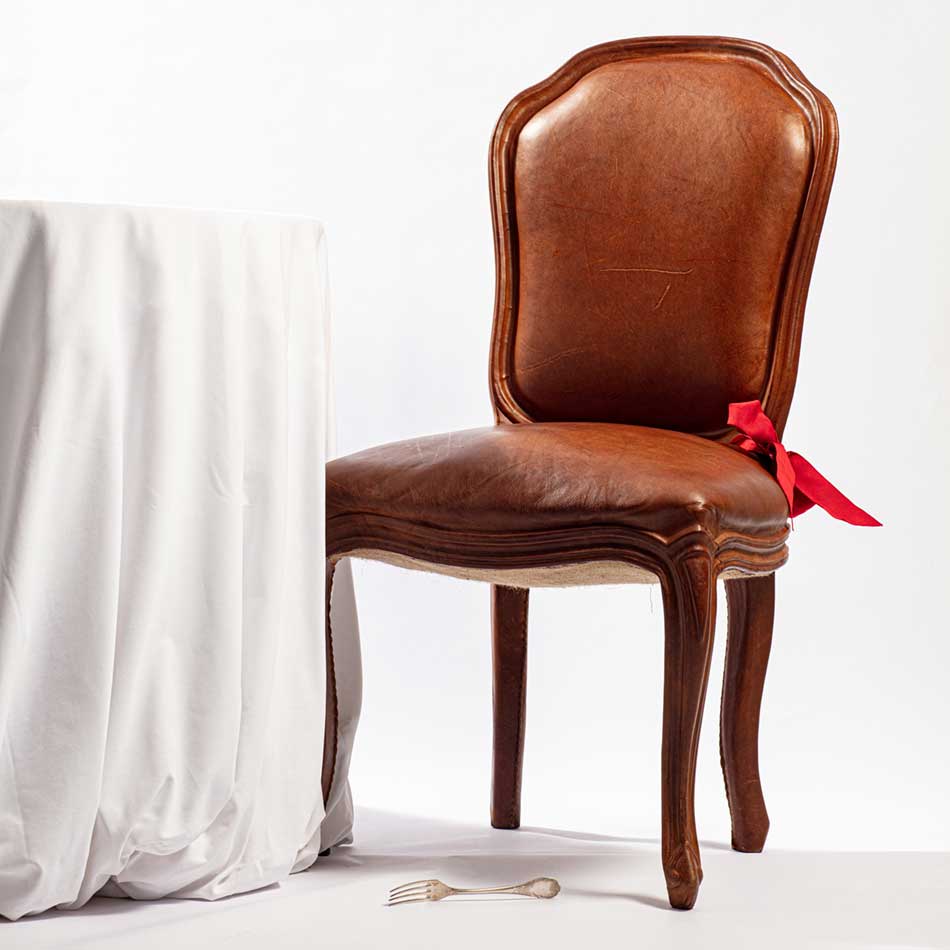
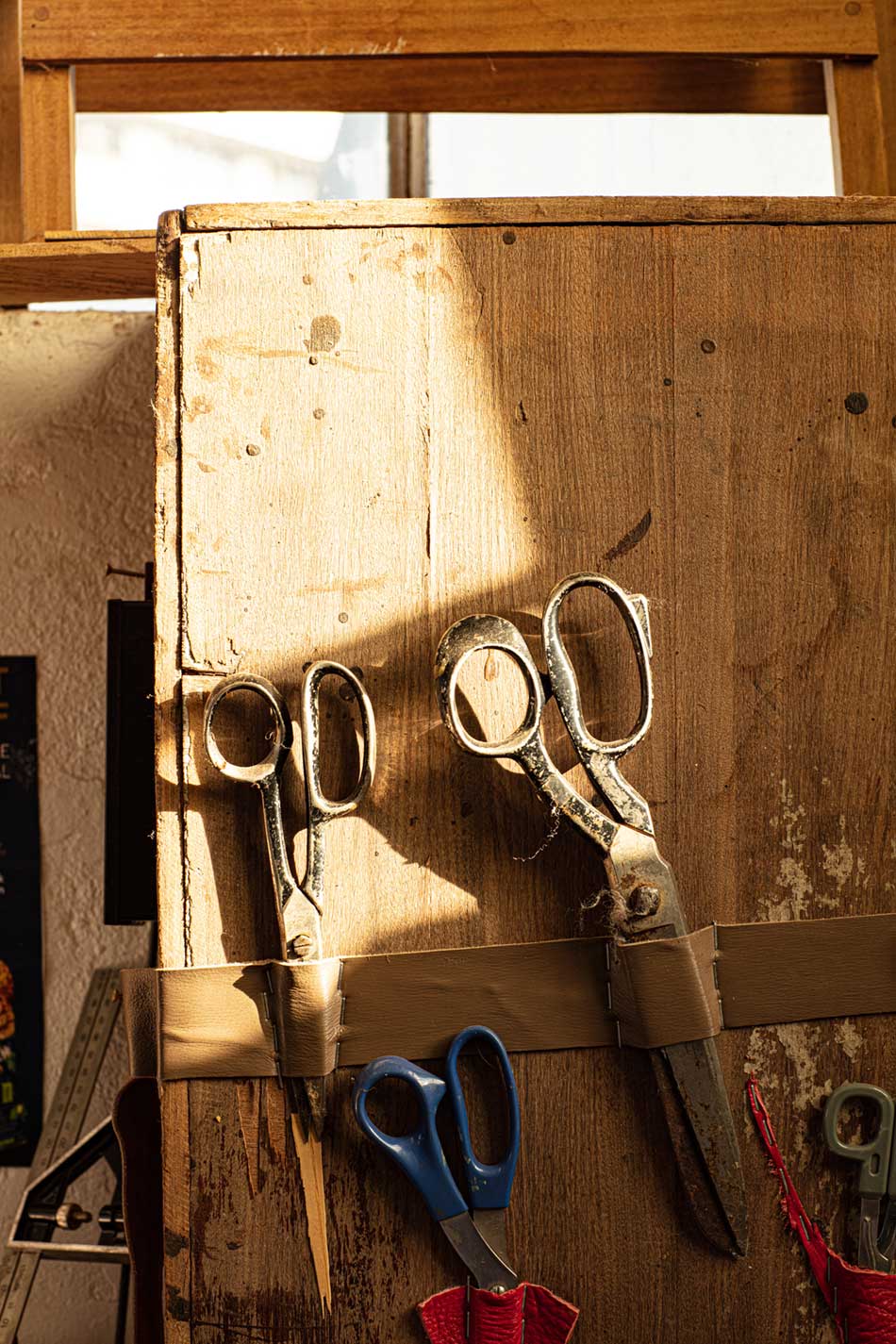
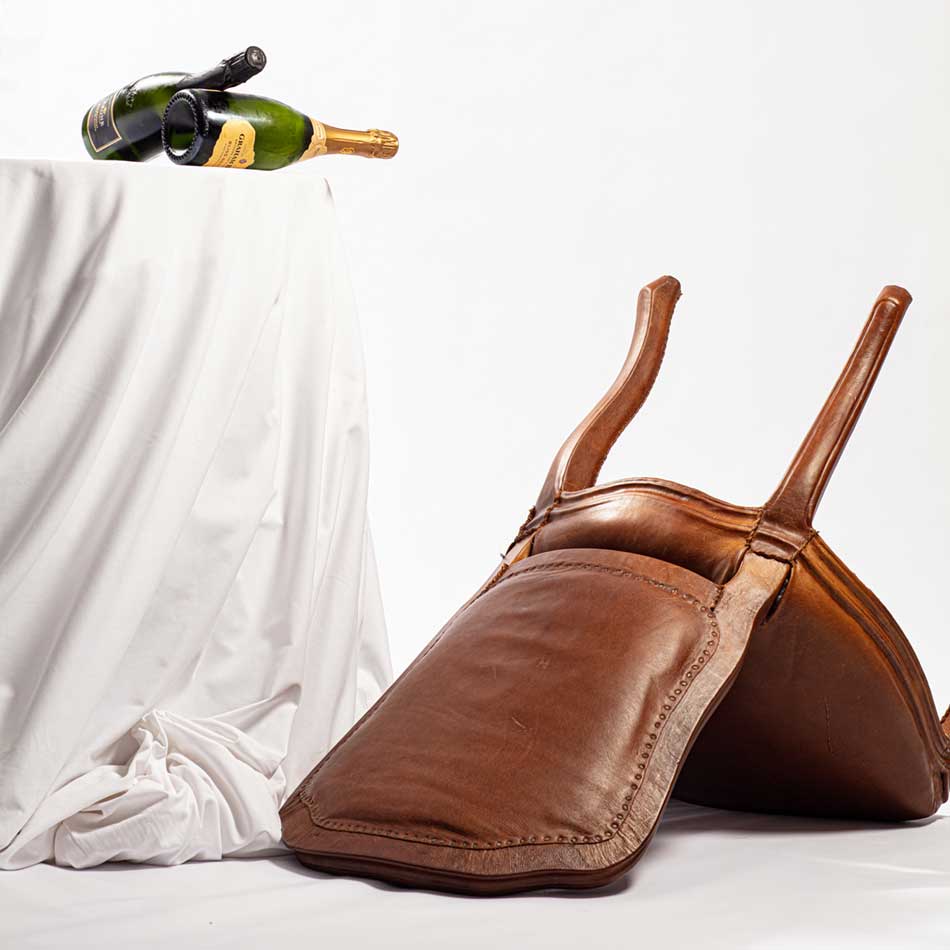
Sometimes, you come up with an idea that seems quite straightforward at first, but when you start looking for someone to help you bring that idea to fruition you realise that true artisans are hard to find. I first had the idea to cover vintage French chairs in leather when we were designing JAN Innovation Studio back in 2018. If it worked, they would be the perfect match for Klein JAN’s dining area, so I was determined. As the fates aligned, I met Roger and Elizabeth James, a pair of leather artisans in Cape Town who have been making magic with leather since the 1980s for fashion houses, luxury interiors and furniture designers. But their story is just as interesting as their craft.
Theirs is not a traditional marriage, but it’s hard to imagine two people more suited to each other’s idiosyncrasies. They both grew up in Llandudno in the 1970s, when this tucked-away little paradise along Cape Town’s coastline was populated by a colony of free spirits. “We were just this clan of kids, hanging out on the beach and surfing until the sun went down,” remembers Elizabeth.
“I’m about four years older than Liz,” Roger interjects, “so we knew about each, but we weren’t really part of the same age group.” In the 1980s, Roger studied fashion design in Durban before he travelled to Europe. “I was stitching leather boots in Guernica (Basque country) and selling them in Camden Town in London.”
The late 1980s were an exciting time in Britain. As the subversive punk era came to a climax, the Thatcher era was drawing to a close. Great change was in the air, and on the streets of London, 13,000 km from sleepy Llandudno, Roger and Elizabeth found each other again and started working together.
When Roger came back to South Africa, he started The Great African Sandal, a highly prolific business that turned out 300 pairs of shoes per day. Elizabeth, who by then had also studied fashion, later joined him there, and they grew the business into one of Cape Town’s great success stories in a very short time, making sandals in summer and leather jackets in winter. But just as their business was about to take its next leap, the shoe industry squeezed them out of the market by buying up all the materials before they could get to them.
Elizabeth says. “We went to the South China Sea for three months,” Roger adds excitedly. “Ja, he said he’d get married if he could get a surf trip out of it,” Elizabeth laughs. They came back, rejuvenated, and opened Cape Town City Custom Leather. “When we had the sandal business, we came across this woman in Greenwich Village who had a shop called New York City Custom Leather, and she just had the most kickass, most beautiful leather stuff, like Wonderbras in leather, leather pants with silver buttons on them…” Elizabeth reminisces. “Back in those days you were either this tattooed Hell’s Angel or you were Martha Stewart. There was no in-between.”
Three years later, however, despite how well their business was doing, the Chinese import market picked up in South Africa, and their business once again found itself at a crossroads. “Our medium was leather,” Elizabeth says, “but making leather garments in South Africa, you couldn’t survive, so we decided to go into furniture. There was a massive demand, and it wasn’t seasonal.” They started Living Leather, an interior business that flourished thanks to their creative energy.
“We started doing leather floors,” says Roger.
“We opened a shop in Joburg,” Elizabeth adds, “and bought a building in De Waterkant, we had a massive factory in Paarden Island… but the 2008 financial crisis just took us out. It was very sad, we had no choice, we had to walk away. I think it’s the most broken we’ve ever been. We loved that company so much and we were supporting so many people.
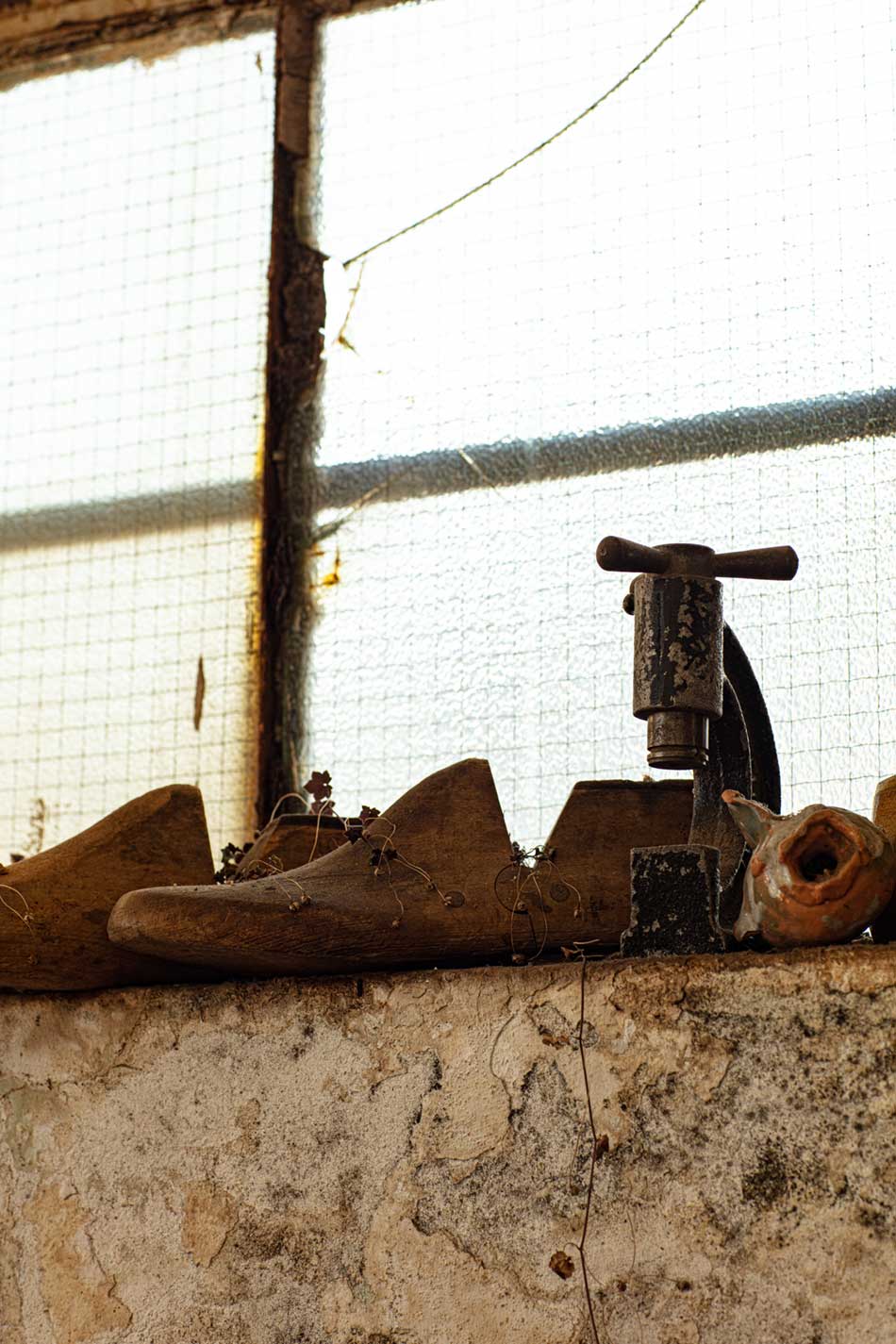
“It took us a while to regenerate,” Elizabeth continues, “but then we found a tiny little place in Woodstock, and I founded a gallery (creating art made of leather). About three months after losing Living Leather, I started Leather Walls, which leads us to the chairs we do for Jan.”
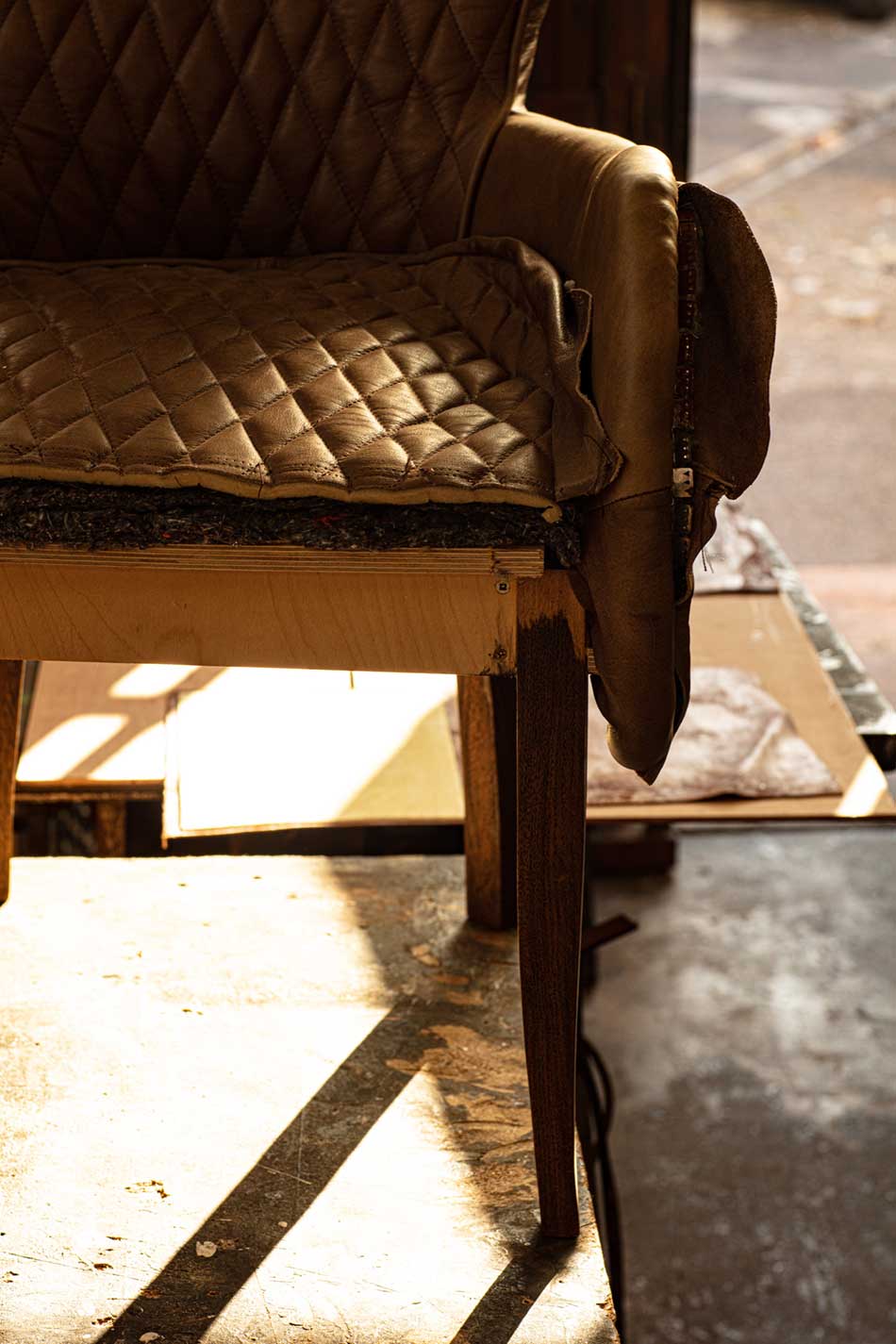
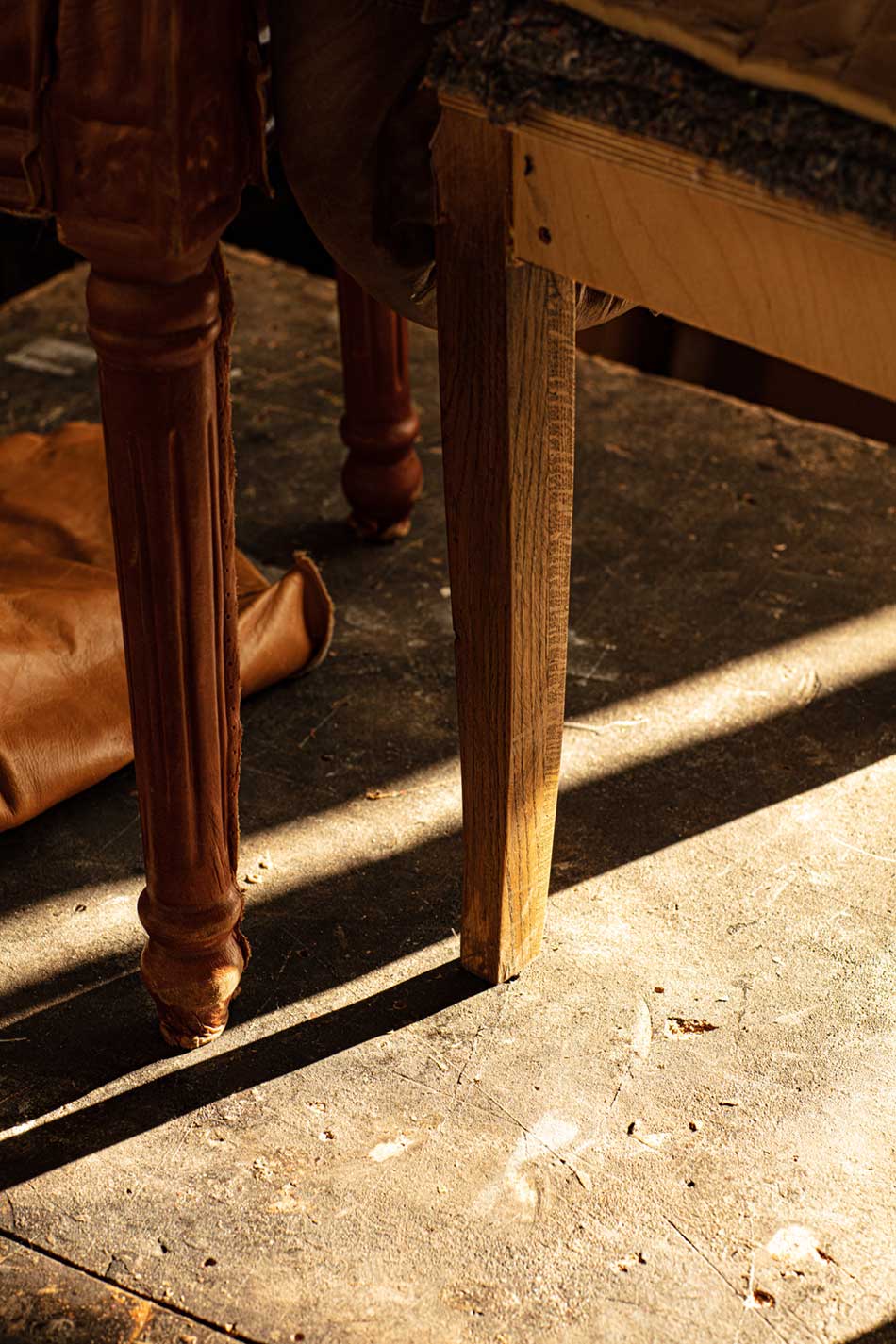
“You learn a lot about the way things work when you restore furniture,” says Roger, “About the most miniscule things, like the copper springs the guys used when they were making them… I mean, we’re putting all this knowledge that we’re getting back into the product, and Liz’s attention to detail means there’s this precision to the work we’re doing.”
“The thing that’s been amazing about our lives is that we’ve developed this ability to morph into whatever the next thing is we’ve got to do,” says Elizabeth.
“But always with leather,” Roger reminds her.
In everything Roger and Elizabeth have ever endeavoured over the course of their careers, they have always married craft with art. In fashion, they followed a design-first philosophy, never resorting to fast fashion. In décor and furniture, their work is precise and bespoke. “Leather has allowed us to mould ourselves into every new chapter in our lives,” Elizabeth says. “We will always be guided by it.”